
Mastering Disputes from Preparation to Presentation with Litigation Software
Litigation software is technology designed to organise, manage, analyse and present case-related information throughout the dispute lifecycle.
ArticlesLitigation cases now often rely on technology, like litigation software, to provide a more effective and streamlined process by reducing the amount of manual tasks and taking on time-consuming admin. With huge volumes of data, evidence and documents in every case, increased client expectations and regulatory changes and pressures, relying on paper bundles or basic electronic storage is no longer a beneficial option for the majority of legal teams.
To examine this in more detail, this article analyses litigation software to provide insights into how law firms can use it to enhance their cases.
What is litigation software?
Litigation software is technology that is designed to organise, manage, analyse and present case-related information throughout a litigation case or hearing. It provides users with a centralised location that stores documents, transcripts, evidence, video depositions, and any other case materials. Legal teams can then search through their portfolio, and tag and retrieve key information quickly.
Unlike more generic document repository tools, litigation software can also create court bundles (also known as case bundles, electronic bundles or e-bundles) and will organise and set up the pagination, cross-referencing and indexing within each bundle. These tools also often offer tools that allow users to present evidence, create real-time transcripts, run video hearings and identify inconsistencies in the opposing counsel's case.
More traditional legal case management systems focus on slightly different areas and are often used across multiple cases, where they track billable hours, allow users to manage client records or create basic task lists. Other types of tools include document management systems thatstore and retrieve files in structured folders and e-discovery platforms, which are used for processing, reviewing, and tagging massive volumes of electronically stored information during the disclosure phase of a trial. However, all of these tools frequently act as isolated parts of a law firm's tech stack.
Litigation software is used throughout the whole case and tools like TrialView can also be used by every person involved in the case - not all vendors provide this functionality. This ensures that all users are working from the same case portfolio and that early case analysis and pre-trial document preparation feed directly into the live courtroom.
How is AI used in litigation software?
The integration of artificial intelligence into litigation software has created a number of debates among legal practitioners and technology vendors, and there are now several regulations being rolled out to ensure these tools are used appropriately and correctly. The central question is whether advanced artificial intelligence is now a mandatory part of modern dispute resolution, or whether it introduces unnecessary risks and liabilities that outweigh its practical use.
AI in litigation software may be a necessity
As the volume of digital communications, disclosure documents, and electronic records used in litigation cases expands, legal teams (especially smaller ones) can no longer process data efficiently or cost-effectively manually. Modern machine learning algorithms can analyse these portfolios quickly to identify connections and detect patterns that basic keyword-based searches miss entirely.
According to pilot project data published by the Harvard Law School Center, the application of AI tools has significantly reduced associate time spent on a case. In high-volume litigation cases, it went from 16 hours down to 3-4 minutes and so lawyers have seen productivity gains of greater than 100x when compared to traditional methods. Research published in the Legal Industry Report indicates that 82% of legal professionals using artificial intelligence experience direct efficiency gains, with 65% saving between 1 and 5 hours weekly, 12% saving between 6 and 10 hours, and 7% saving 11 or more hours. These efficiency gains allow legal teams to dedicate more time to high-value, judgement-driven work like strategic planning and advocacy.
Risk & professional liability
However, there are some challenges that have to be faced when using any kind of AI functionality in litigation software. The most critical technical risk is algorithmic hallucination, where generative models produce legally plausible but entirely fabricated case law citations. This risk has led to severe consequences in real court cases.
Data privacy, confidentiality, and attorney-client privilege are also major concerns. Uploading case documents or sensitive personal data into public, self-learning generative tools raises severe compliance challenges under data protection regulations such as GDPR and HIPAA. And if a vendor uses workspace data to train its public models, client confidentiality is directly compromised.
Finally, critics note that standard artificial intelligence models suffer from a strict technical limitation known as the context window. Most models can only process 1,000 to 2,000 pages at a time. When confronted with a standard litigation dataset of tens of thousands of pages, these models are forced to analyse fragmented subsets of files, which directly causes hallucinations and missed connections.
TrialView works to overcome these challenges. Our AI is kept up to date and at the highest standard, and your personal data is never shared or used to train our models (visit our security page for more information). Additionally, our litigation software uses your whole portfolio, with no limit to the number of pages used, ensuring you are given the most accurate and in-depth answers and information. We also understand how important the experience of a lawyer is, and our tool is there to support you and make your case more streamlined and successful, not replace your knowledge.
Using TrialView as your litigation software
TrialView serves as a prime example of an intelligent, unified workspace designed specifically for high-stakes dispute resolution, commercial litigation, international arbitrations, and regulatory hearings. It can be used by every legal professional in your case across the case's preparation, management and presentation.
During the case preparation phase, TrialView can be used to automate bundling, create timelines and prepare witness statements, converting recordings into hyperlinked transcripts. Our AI tool can then be used to identify inconsistencies in the case and highlight strategies that could be pursued in the courtroom. Using our Case Intelligence function, users can ask contextual, natural language questions to find connections across their complete evidence portfolio. The case can then be managed in the platform, with automatic updates from late inserts and additional uploads.
At trial, TrialView provides EPE both within the platform and as an additional support add-on. The platform supports live annotation with discrete screen control to separate private notes on the advocate's screen from public courtroom monitors, integrates real-time interactive transcription so lawyers can tag key testimony live, and enforces user-level permissions to manage complex, court-ordered confidentiality rings. TrialView also offers video conferencing and equipment hire for all of your case needs.
Ultimately, this integrated approach to litigation software delivers significant efficiency gains while maintaining the highest professional standards of accuracy and confidentiality. Interested? Book a personal demo here.
Frequently asked questions
What is the main difference between litigation software and standard case management tools?
Traditional case management systems focus primarily on administrative tasks like tracking billable hours, storing files, or processing early stage data in isolation. In contrast, modern litigation software acts across the entire dispute lifecycle. It provides case analysis and court bundling, as well as live courtroom presentation tools, real-time transcription, and hearing services.
How does AI actually improve efficiency for legal teams?
Incorporating AI into high-volume litigation workflows can reduce the time an associate spends on document tasks, providing a massive productivity gain. Industry research shows that 82% of legal professionals using AI experience direct efficiency gains, freeing up critical hours to focus on strategic planning and customer advocacy.
What are the main risks of using AI in legal disputes, and how does TrialView address them?
- AI hallucinations - Generative AI models fabricating legally plausible but fake case citations.
- Data privacy and confidentiality - Security risks associated with feeding sensitive case data into public, self-learning models.
- Context window limits - Most standard AI models can only process 1,000 to 2,000 pages at a time, resulting in fragmented analyses when dealing with massive litigation datasets.
TrialView solves these issues by enforcing strict data privacy (user data is never shared or used to train public models) and removing page limits completely. This allows the software to process your entire evidence portfolio simultaneously, eliminating fragmentation and significantly lowering the risk of missed connections.
Can TrialView also be used during the actual trial or live hearing?
Yes. TrialView transitions seamlessly from preparation to presentation. During a live trial or hearing, the platform supports Electronic Presentation of Evidence (EPE), interactive real-time transcription tagging, and discrete screen controls that keep an advocate's private notes hidden from public courtroom monitors. It also features built-in tools to manage complex, court-ordered confidentiality rings.

Civil Justice Council Consults on Rules for AI Use in Court Documents

How Law Firms Are Winning More By Doing Less

One Case, One Platform? How to Fix the Fragmentation

The EU AI Act and International Arbitration
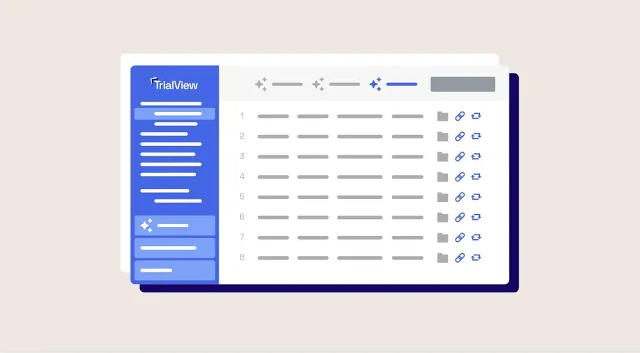
How TrialView Supports the Entire Case Lifecycle - From First Instruction to Final Resolution
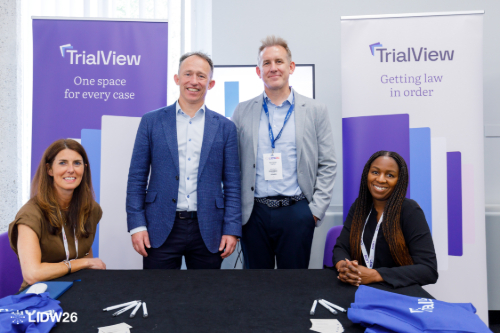
Counsel in the Age of AI
See TrialView in action
As one of the leading litigation platforms, TrialView is the perfect addition to your tech stack. Book a free demo to get started.
Book a demo